




Key takeaways
- In aviation MRO, uptime is the whole game. A maintenance partner’s value is how quickly it gets an aircraft back in service.
- GA Telesis runs a full spectrum of MRO under one platform: engine, component, composite, landing gear, and wheels and braking systems.
- The real differentiator is integration. MRO sits alongside Flight Solutions parts and USM and the leasing and finance groups, so repair, replacement parts, and assets come from one partner.
- Live Global 24/7/365 AOG support and a global footprint mean help is available wherever a fleet operates.
- When you compare MRO providers, judge them on breadth of capability, parts access, certifications, and how fast they answer an aircraft-on-ground call.
When an aircraft is on the ground for maintenance, every hour costs money. Aviation MRO is where that cost is controlled or allowed to run, so the maintenance, repair, and overhaul partner an airline or lessor chooses is a decision about uptime, not just about wrenches. The best aircraft MRO services do more than fix what is broken. They shorten the path from problems to dispatch. That is where GA Telesis stands out: its MRO doesn’t work alone. It sits inside an integrated aftermarket platform that also supplies the parts and the assets a repair often needs.
This is what to weigh when choosing an MRO partner in the aviation aftermarket, and how GA Telesis measures up against those criteria.
What to look for in an aviation MRO partner
Before comparing providers, define the criteria. A few key capabilities can distinguish an integrated aviation MRO partner from a provider with a more limited scope.
- Breadth of capability. Can one partner support engines, components, composites, landing gear, wheels and brakes, and other repair needs? An integrated provider can help reduce the need to subcontract portions of the work before returning an LRU or component to service.
- Parts and material access. A repair can stall without the right material. Does the MRO have access to OEM new material, used serviceable material (USM), and distribution capabilities to support repair requirements without relying entirely on outside supply chains?
- Certifications and quality. Are the repair facilities approved by the aviation authorities relevant to your fleet, such as the FAA, EASA, and CAAC? OEM-authorized repair center status can also matter, showing alignment with OEM requirements and quality standards.
- Turnaround time and responsiveness. How quickly does the provider respond to an aircraft-on-ground requirement, and how efficiently can work move through the repair process?
- Global reach and field support. Is support available near where your aircraft operate? Can the provider deploy field teams for on-site or on-wing support when maintenance requirements cannot wait for a traditional shop visit?
Consider these capabilities together rather than individually. A provider with strong repair capabilities but limited material access may still leave operators sourcing parts elsewhere. In contrast, a distributor without repair capabilities may require additional vendors to complete the work. An integrated MRO partner that combines repair capabilities, material access, OEM relationships, and deployable field support can provide a more streamlined path from maintenance requirement to return to service.
Full-spectrum capabilities under one roof
GA Telesis covers the major MRO service lines through its own facilities, providing an integrated approach across MRO services and capabilities: engine, component, composite, landing gear, and wheels and braking systems.
These capabilities operate through dedicated facilities. Component repair and overhaul, landing gear repair and overhaul, and wheels and braking systems MRO are based in Miami, while composite repair and overhaul is performed in Fort Lauderdale and engine services are provided through GA Telesis Engine Services (GATES) in Helsinki. Each discipline brings specialized expertise while operating within the broader GA Telesis MRO network. This allows maintenance requirements that span multiple disciplines to be coordinated through one organization.
GA Telesis first developed its landing gear capabilities internally to support the CRJ, 737NG, and E175 platforms. The business later expanded by acquiring AAR’s landing gear overhaul and wheels and brakes operations, extending those capabilities across a broader range of commercial and military aircraft. Today, the operation holds FAA and CAAC landing gear certifications. It maintains a landing gear lease and exchange pool, giving operators access to serviceable, release-tagged gear while their own units undergo maintenance.
That integration also extends to work that crosses traditional shop boundaries. For example, actuators received for overhaul at the Landing Gear facility may require composite-related work that GA Telesis’ Composite Repair Group can support before returning them for installation. Keeping these capabilities within the GA Telesis network helps coordinate complex repair requirements without introducing unnecessary handoffs between unrelated providers.
The value of this model is not simply the number of capabilities available. It is the ability to coordinate work across specialized disciplines, facilities, and material resources under one organization, helping streamline the maintenance process from induction through service return.
The integrated advantage: MRO plus parts plus assets
Most independent shops repair what you bring them. GA Telesis does that too, but the rest of the platform backs the repair, and that is the real difference in the aircraft aftermarket.
When a repair needs a part, the Flight Solutions Group can supply it new or as USM, and it can exchange, lease, or consign inventory to keep a job moving. Flight Solutions is the platform’s material arm: parts supply and exchange, USM distribution, consignment, repair management, and inventory lease and management. That material doesn’t appear out of nowhere. GA Telesis runs its own teardown and disassembly programs, harvesting serviceable parts from retired airframes and engines and returning them to service. Used serviceable material returns to service on airworthiness release documentation, an FAA Form 8130-3, or an EASA Form 1, paired with full traceability back to the source unit. Those release tags, defined by the FAA and EASA, are what let a harvested part re-enter a fleet with the same paperwork discipline as a new one.
When the smarter move is to swap an asset rather than waiting out a full overhaul, the leasing and finance groups make that possible. Here is what that means in practice: a grounded aircraft does not sit idle while three separate vendors coordinate. Repair, replacement parts, and available assets can come from the same partner, which shortens turnaround time and reduces cost. A component fails, the shop opens the repair, and if the repair runs long, an exchange unit or leased asset covers the aircraft in the meantime. One partner sees the whole picture, so the decision to repair, exchange, or swap is made once, not renegotiated across three contracts.
How integration shortens an AOG event
An aircraft-on-ground event is the sharpest test of a maintenance partner because it collapses every criterion into one clock. Walk through where the time usually goes, and the case for an integrated platform gets concrete.
The first delay is diagnosis and sourcing. On a fragmented supply chain, the operator confirms the fault, then starts calling to find a serviceable part, then waits on a quote, then waits on shipping. When the same partner holds the repair capability and the parts inventory, the search step compresses. If the part exists as USM or in an exchange pool, it can be committed while the paperwork is prepared rather than after a separate vendor is found.
The second delay is the hand-off between repair and material. When a shop must send out for a part it cannot source in-house, the aircraft waits on someone else’s lead time. An integrated platform can pull from its own distribution and lease pool, so the repair and the part move on the same timeline instead of in sequence.
The third delay is the fallback decision. Sometimes the fastest return to service is not repair at all; it is an exchange unit or a leased asset. A partner that only repairs cannot offer that path. GA Telesis can, because Flight Solutions and the leasing and finance groups sit alongside MRO on the same platform. None of this removes the physics of a shop visit, and no honest provider will promise a fixed turn time sight unseen. Integration removes coordination overhead between separate companies, and on an AOG that overhead is often the difference between a same-day fix and a multi-day wait.
Global reach and 24/7/365 AOG response
An aircraft-on-ground event does not wait for business hours. GA Telesis provides Live Global 24/7/365 AOG support, reachable at +1-954-348-3535, with support points across the Americas, Europe, the Middle East, and Asia-Pacific. Proximity matters here. Parts and expertise near where a fleet operates turn a potential grounding into a same-day fix rather than a multi-day wait, because the shorter the distance between the aircraft and the serviceable part, the shorter the shipping leg on the critical path. A single AOG line into an integrated platform also means the person who answers can connect you to repair, parts, and asset options in one conversation. If you want to reach the team, contact the MRO team or start with an overview of GA Telesis.
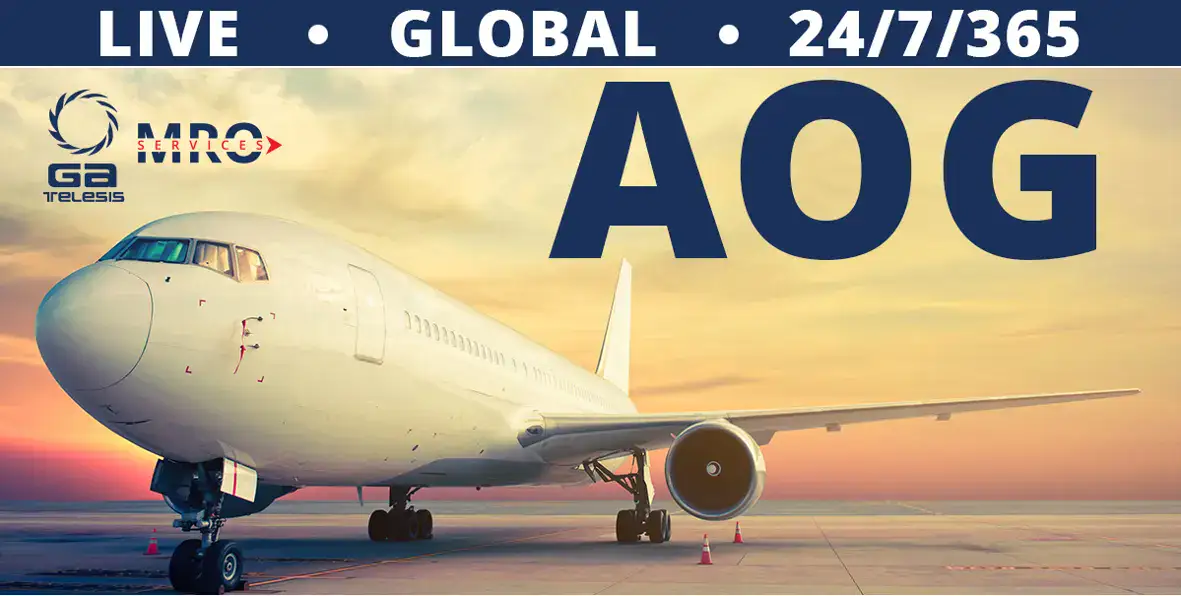
GA Telesis aircraft providing global MRO services, emphasizing 24/7 availability and industry leadership.
GA Telesis MRO FAQs
What MRO services does GA Telesis offer?
GA Telesis provides engine, component, composite, landing gear, and wheels and braking systems repair and overhaul through its MRO Services group. Component, landing gear, and wheels and brakes work is based in Miami, composite repair and overhaul is in Fort Lauderdale, and engine services run through GA Telesis Engine Services (GATES) in Helsinki, all supported by a global network.
What is AOG support, and does GA Telesis provide it?
AOG stands for aircraft-on-ground, the urgent situation when a fault or a missing part keeps an aircraft from flying. GA Telesis offers Live Global 24/7/365 AOG support, reachable at +1-954-348-3535, to get parts and solutions moving fast and limit costly downtime. Because that line reaches an integrated platform, one call can open a repair, source a part, or arrange an exchange unit.
Does GA Telesis supply parts to its MRO facilities as well as OEMs and independent MROs?
Yes. Through the Flight Solutions Group, GA Telesis provides material solutions to support its own MRO operations as well as OEMs, airlines, and independent MRO providers. Capabilities include parts supply and exchange, OEM new material distribution, USM distribution, consignment, repair management, and inventory lease and management.
How is an integrated MRO platform different from a standalone shop?
A standalone shop repairs what you bring it and sends out for anything it cannot source in-house. An integrated platform keeps repair, parts, and assets under one partner, so a grounded aircraft does not wait while separate vendors coordinate. The repair, the replacement part, and an available lease or exchange asset can all come from GA Telesis, which is what shortens turn time on an AOG event.
Where are GA Telesis’ MRO facilities located?
Component, landing gear, wheels and braking services are based in Miami, composite repair and overhaul are performed in Fort Lauderdale, and engine services are provided through GATES in Helsinki. These facilities are supported by regional support points across the Americas, Europe, the Middle East, and Asia-Pacific.
Talk to GA Telesis about your MRO needs
If you are weighing an MRO partner, the fair test is whether one provider can protect your uptime end to end: cover the service lines, supply the parts, and answer the AOG call without a hand-off. See the full MRO services and capabilities or contact the MRO team for a capability review. Need parts fast? Explore the Flight Solutions Group.